Tai Chi ~ release your way to improved balance, flexibility and concentration
A new Professor’s Form class begins in November. Enroll now.
More info below
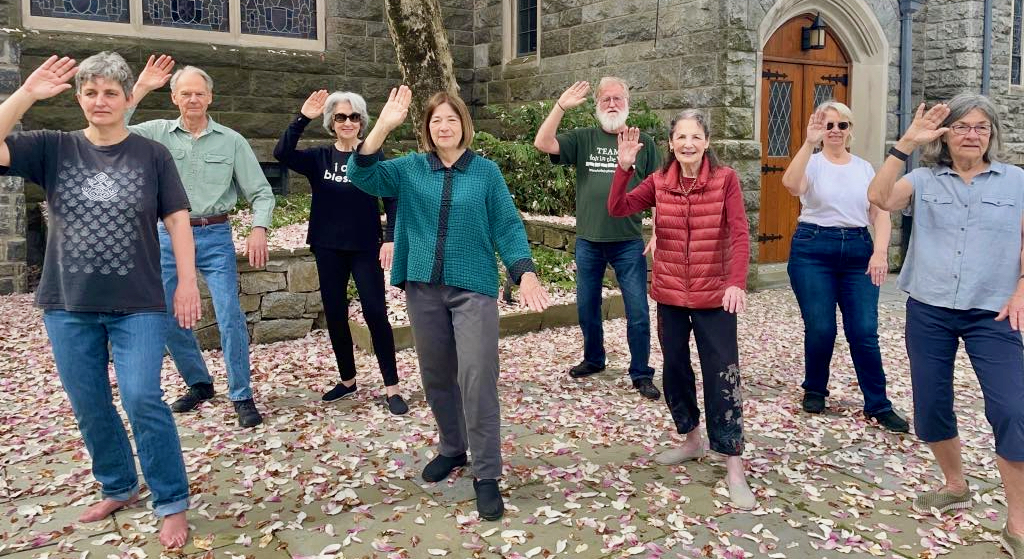
A relaxed upright posture, catlike weighting and unweighting of steps and internally focused breathing are some of the hallmarks of the Tai Chi approach.
What is Tai Chi?
Tai Chi has many dimensions and qualities. On one hand it is a prescribed set of movements called the “Form”. On the other it is a set of principles that are practiced while performing those movements. Ben Lo, a senior student of Professor Cheng Man-ching, articulated the principles as:
Relax (sung). Release all unnecessary tension in the body and mind, letting the body hang from the skeleton so the chi can sink and the movements become effortless.
Separate the weight (yin and yang). At any moment, keep the weight clearly in one leg, with the other empty. Double-weighting, or being uncertain where the weight is, is what makes the form stiff and the root weak.
Turn the waist. The waist, not the arms, drives the movement. The hips and torso turn as one unit, and the hands follow the turning of the body.
Keep the body upright. The spine stays vertical and the head is suspended as if from a string, with no leaning forward, backward, or to the side, even in deep or extended postures.
Beautiful Lady’s Hand. The wrist stays straight and the hand is relaxed but extended, flat and natural, so energy flows through to the fingertips without the hand collapsing or being held stiffly.
Do all of these at the same time!
The movements of the Form taken together with the principles result in improved health, flexibility, balance, presence, social listening and responsiveness.
The Tai Chi Form
Building on Qigong, Tai Chi Chuan was developed by the Taoist monk, Chang San-feng between the 12th and 13th centuries. The Form (and principles) that we study is the Yang style form in 37 postures finalized by the late Professor Cheng Man-Ching. The Professor, as he was known, introduced it in NYC’s Chinatown in the 1960s and 70s. It has become the most prevalent Form worldwide.
The Benefits
Helps with muscle strength, flexibility, balance and aerobic conditioning – Harvard Medical School
Addresses mood, aerobic capacity, energy, stamina, flexibility, strength – Mayo Clinic
Improves fibromyalgia, thinking power, depression management, fall risk – Cleveland Clinic
The Teacher
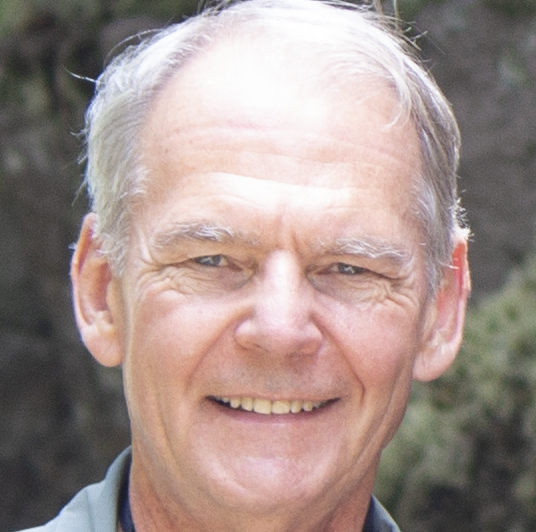
Will Morrison
Will begain his tai chi studies with Maggie Newman in the late 1970’s and, when he moved to Westchester County, continued with Ed Young, senior student and translator for Professor Cheng Man-Ching. After many years he was asked by Mr. Young to teach the Professor’s Form.
He is a certified Tricia Yu Tai Chi Fundamentals® instructor.
Will teaches in Old Greenwich and at the Hastings Tai Chi Study Group in Hastings-on-Hudson, NY.
Will has taught at Stamford Hospital’s Sarner Health and Fitness Institute, the Greenwich YMCA, The Wallace Center (Greenwich Senior Center), and through the Greenwich Continuing Education program for seven years.
Enroll now for a “Professor’s Tai Chi Form” to start in November
Professor Cheng Man-Ching’s 37-posture form, the world’s most widely practiced tai chi form. Mondays at 10:30am in Old Greenwich.
What students are saying…
“Your focus on the basics of posture, balance, and weight distribution, are helpful throughout the day. Thanks.” – D and P
“Will is encouraging, clear, precise, patient and passionate about tai chi.” – A.S.
“I’ve noticed a definite improvement in my balance and I also walk more erectly.” – G.B.
More about Will
After 25 years, Will Morrison retired from IBM where he joined Research and later was a senior leader in the IT enablement of collaboration for the company. Previously, he was the Head of the Muppet Workshop for Jim Henson and an Off-Broadway lighting designer. Will is a recent past President of the Greenwich Retired Men’s Association. Will and his wife Leslee Asch Morrison are longtime residents of Old Greenwich, where they raised two sons. He is an avid sailor and a member of the Riverside and Old Greenwich Yacht Clubs.
© 2026, experiencetaichi.org, All Rights Reserved

